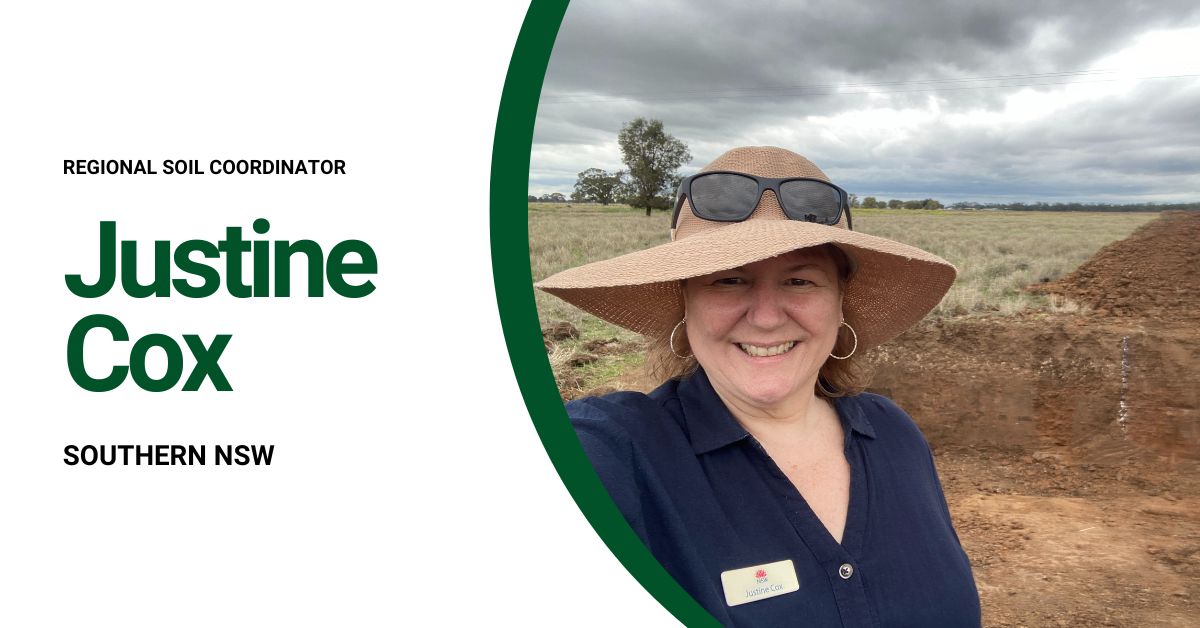
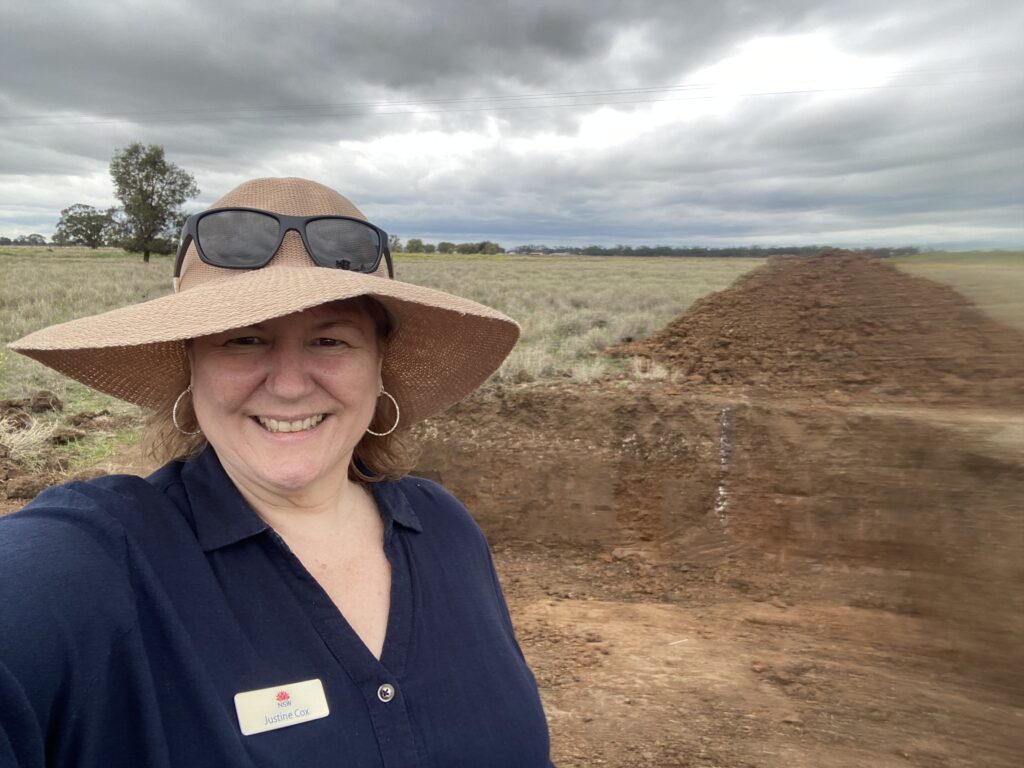
My passion for soil was uncovered in 1991 when I brought a trailer load of soil from central South Australia back to Adelaide University to do some plot trials on ephemeral plants as part of my Honours degree. I fell in love with ecology, applied science and the wonders (and challenges) of soil.
I scored a position as a soil scientist with the NSW Department of Primary Industries and Regional Development (NSW DPIRD) on the far north coast of NSW. I enjoyed a 21-year career in research, working predominantly in horticultural crops and pastures. I loved the variety each crop demanded, such as irrigation requirements, root systems, plant life cycle, and how that all changed with soil type. A highlight was understanding the unique challenges of the Australian native macadamia tree.
My research included examining a range of soil amendments (for example compost, mulch, biochar) and how application influenced factors such as yield, crop quality, soil properties, and reduction in greenhouse gas emissions. I also examined soil erosion and control options in macadamia orchards, trialled methodologies to quantify soil health properties and contributed to the Northern Rivers Soil Health Card.
I’m particularly fascinated by soil biology. I’ve developed and hosted workshops to show landholders the organisms that live in the soil and their roles. It’s exciting when farmers realise the immense benefits from the bacteria, fungi and invertebrates that are so essential for sustainable agriculture and ecosystem health.
Working with landholders ignited my interest in soils communication. I have had the great fortune to learn from fabulous mentors on ways to engage and inform landholders—including from my predecessor, Luke Beange, who retired at the end of 2025. We have a strong and connected network in soil science in Australia, and collaboration with my colleagues has put me in a great position to tackle the role of Regional Soil Coordinator for southern and central NSW.
My main focus in this role is to translate soil-related science, research and development into practical on-ground information and tools for landholders in the region. I’m keen to learn from landholders in my district, establish deep networks and bring the relevant science to the paddock and orchard. The landholders’ experiences will help refine the training, videos, workshops, farm trials and other tools we use.
Working through NSW DPIRD, I’ll continue publishing the quarterly soils newsletter—All the Dirt—and running the NSW Soils Network of Knowledge (SNoK) monthly webinars. I’m also looking forward to working with the other Regional Soil Coordinators, through SSA’s Smart Soil Community of Practice, connecting what’s happening in the regions at a national level.
Subscribe to receive invitations to the monthly SNoK webinars, or the quarterly newsletter ‘All the Dirt’, here.
In southern NSW, the Regional Soil Coordinator is supported by the Southern NSW Innovation Hub, which receives funding from the Australian Government’s Future Drought Fund.